articleCurated Research & Deep Dives

AI Software Strategy, Tutorials & Playbooks (2026)

In-depth technical guides, head-to-head model benchmarks, and production playbooks to help you build virtual influencers, master vibe coding, and automate business workflows.

tuneInteractive Library

Curated AI Guides, Frameworks & Technical Analysis (2026)

search
Showing 9 of 49 Guides
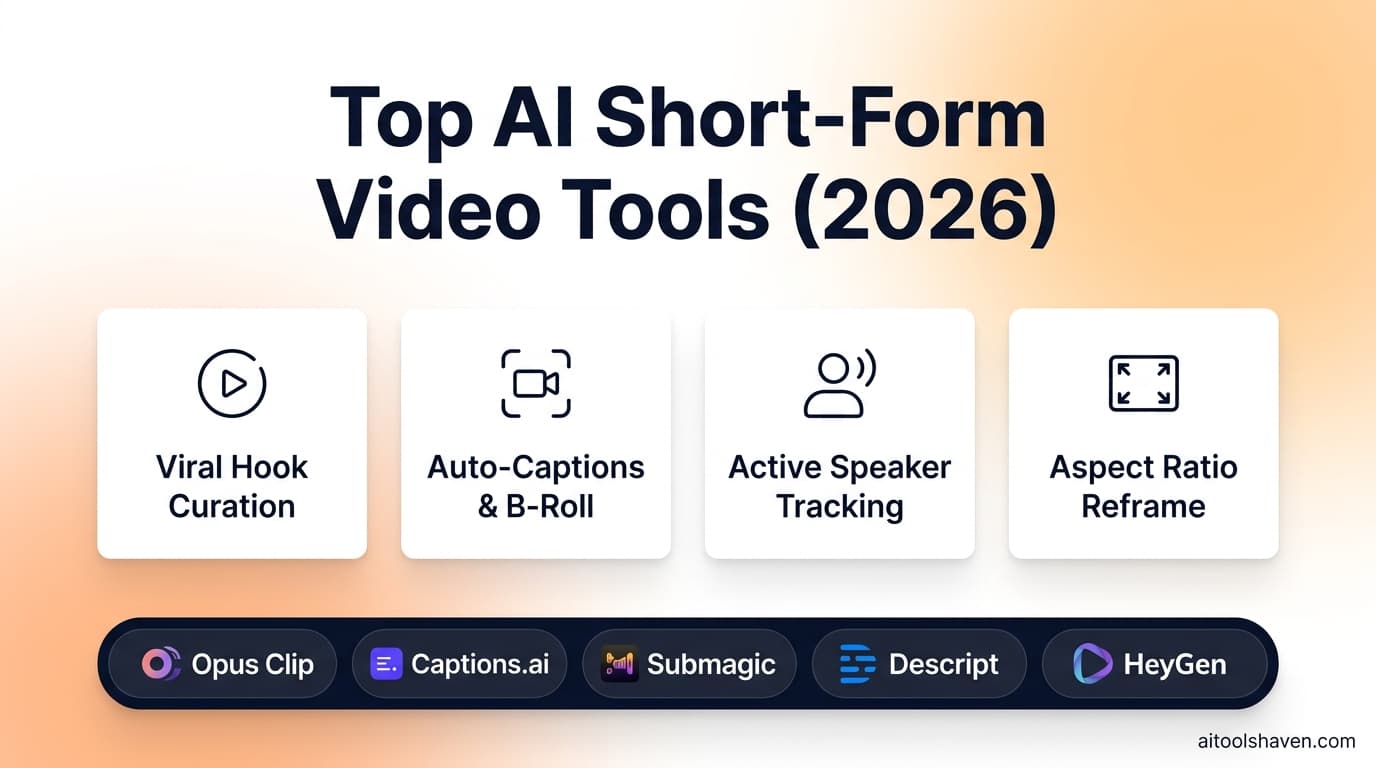
Best AI Short-Form Video Repurposing Tools in 2026
Video

Best AI Short-Form Video Repurposing Tools in 2026

Turn 1 long-form YouTube video or podcast into 20 viral TikToks, Reels, and Shorts in minutes. Compare Opus Clip, Captions.ai, Submagic, and Descript for AI viral hook detection, auto-b-roll, and dynamic captions.

Read Articlearrow_forward
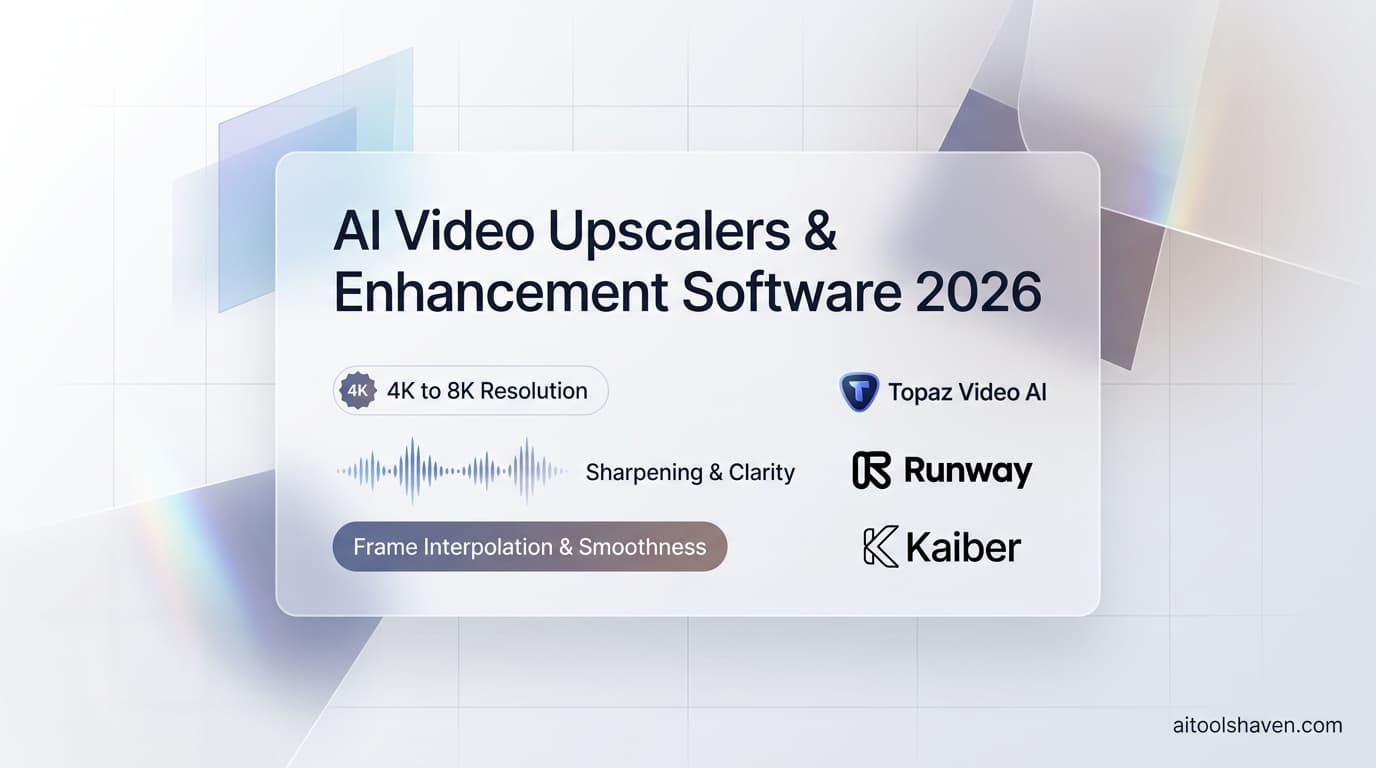
Top AI Video Upscalers & Enhancement Software in 2026
Video

Top AI Video Upscalers & Enhancement Software in 2026

Breathe new life into vintage clips and sharpen blurry renders. Compare the best AI video upscaling and enhancement tools of 2026—featuring Topaz Video AI, Runway Gen-3, and Kaiber.

Read Articlearrow_forward
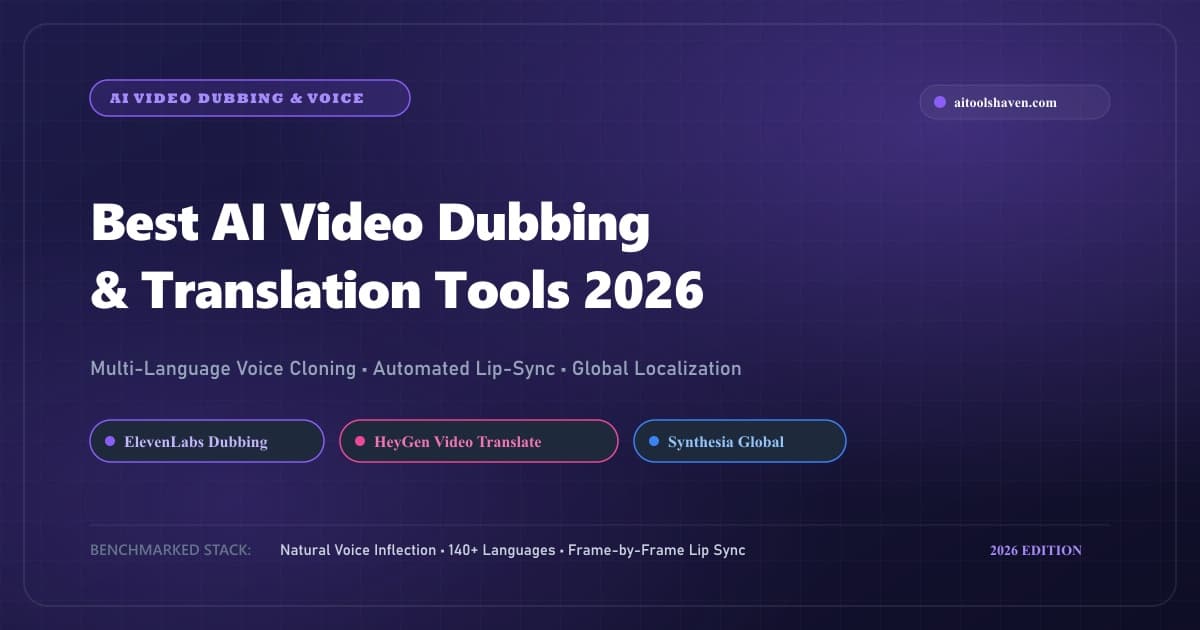
Best AI Video Dubbing & Translation Tools in 2026
Video

Best AI Video Dubbing & Translation Tools in 2026

Localize your video content for global audiences with voice cloning and lip-syncing. Compare ElevenLabs, HeyGen, Synthesia, and Captions for automated multilingual dubbing.

Read Articlearrow_forward
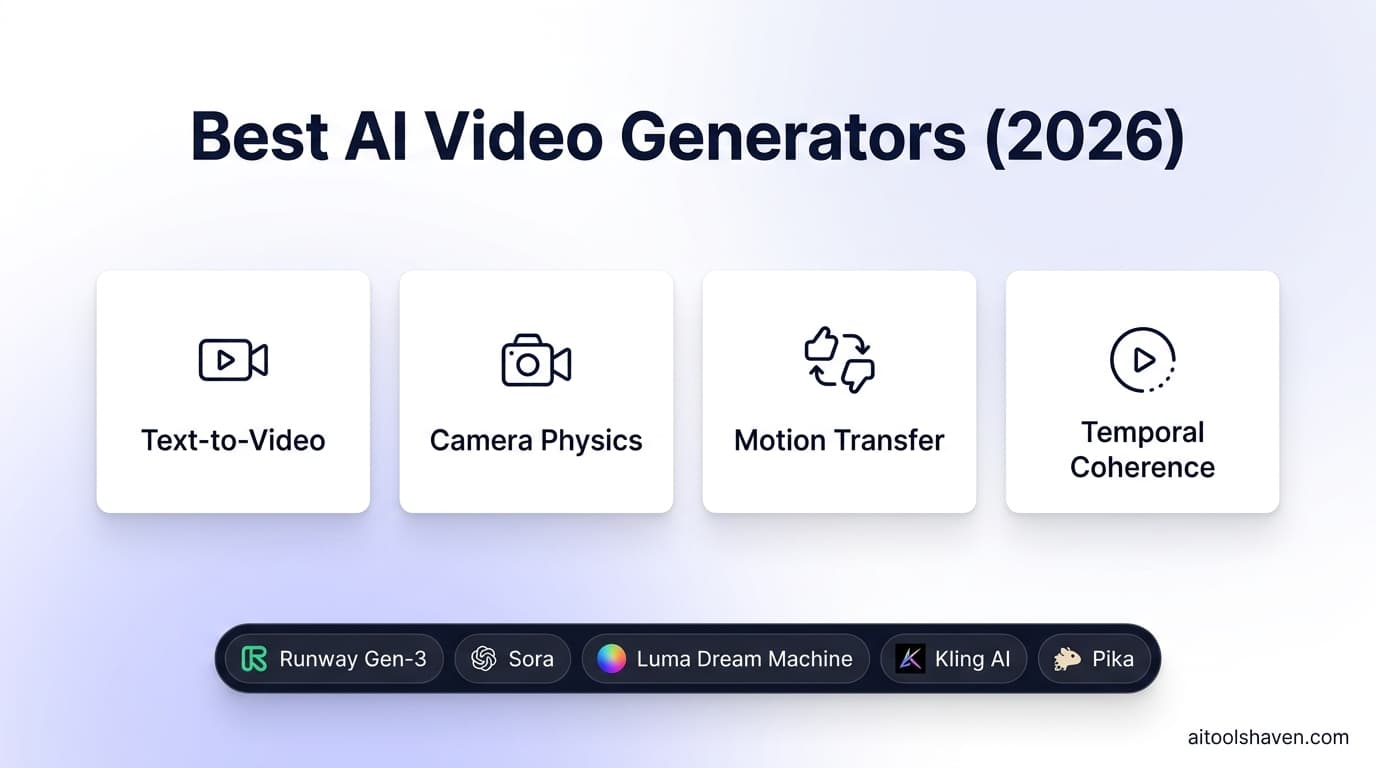
The 7 Best AI Video Generators in 2026: Hollywood-Grade Models Compared
Video

The 7 Best AI Video Generators in 2026: Hollywood-Grade Models Compared

Discover the top AI video generation models of 2026. Compare Runway Gen-3 Alpha, OpenAI Sora, Luma Dream Machine, Kling AI, and Pika for cinematic camera physics, resolution, and text-to-video quality.

Read Articlearrow_forward
Cursor vs Windsurf vs Copilot: The Best AI Code Editors in 2026
Coding

Cursor vs Windsurf vs Copilot: The Best AI Code Editors in 2026

The battle for developer mindshare has moved beyond simple tab-autocomplete. Compare Cursor AI (Composer), Windsurf (Cascade), and GitHub Copilot for multi-file editing, whole-codebase indexing, and agentic speed.

Read Articlearrow_forward
Devin vs Devika vs Claude Engineer: Top Autonomous AI Software Engineers
Coding

Devin vs Devika vs Claude Engineer: Top Autonomous AI Software Engineers

Can AI truly replace software engineers? Compare Devin (Cognition AI), Devika (Open Source), and Claude Engineer for SWE-bench problem solving, full-stack bug fixing, and sandbox execution.

Read Articlearrow_forward
Vibe Coding in 2026: Bolt.new vs Lovable vs v0 Generative UI Stack
Coding

Vibe Coding in 2026: Bolt.new vs Lovable vs v0 Generative UI Stack

Vibe coding has taken the tech world by storm. Compare Bolt.new (StackBlitz), Lovable.dev, and v0 by Vercel to turn natural language prompts into live, deployed full-stack web applications.

Read Articlearrow_forward
Aider vs Cline: Top Terminal & Open-Source AI Coding Assistants
Coding

Aider vs Cline: Top Terminal & Open-Source AI Coding Assistants

Prefer coding in your terminal or inside stock VS Code? Compare Aider and Cline (formerly Claude Dev) for automated git commits, multi-file diffing, and local CLI power.

Read Articlearrow_forward
The Architecture of AI Coding Agents: SWE-bench, MCP & Sandbox Execution
Coding

The Architecture of AI Coding Agents: SWE-bench, MCP & Sandbox Execution

How do modern AI coding agents actually work under the hood? Explore tree-sitter repository indexing, Anthropic's Model Context Protocol (MCP), and secure container sandbox execution.

Read Articlearrow_forward

40 more articles available

biotechResearch & Benchmark Standards

The AIToolsHaven Research & Evaluation Methodology

How our editorial lab tests foundation models, benchmarks autonomous agents, and stress-tests commercial workflows to provide unbiased technical intelligence.

sciencePillar 1: Production Workload Stress-Testing

Hands-On Production Benchmarking vs. Synthetic Vendor Claims

Theoretical benchmark scores rarely reflect how software performs during deadline-driven client deliverables.

When evaluating coding assistants, we do not rely on generic synthetic benchmarks. Instead, we run real-world multi-file refactoring tasks across large TypeScript repositories, testing how tools handle complex dependency graphs and project context windows.

Similarly, when reviewing AI video generators, our team renders high-motion cinematic sequences to test temporal consistency, camera angle adherence, and artifact distortion under heavy GPU rendering loads.

This hands-on methodology guarantees that our comparative ratings reflect real practitioner value rather than vendor marketing brochures.


speedPillar 2: Latency & Token Economics

Real-World API Latency, Token Economics & Hardware Limits

The best AI software balances high-reasoning intelligence with predictable operational costs and low time-to-first-token.

A reasoning model with brilliant outputs is impractical for production pipelines if it requires 45 seconds to generate a simple JSON response or exhausts API budgets within hours.

Our deep dives analyze token consumption rates, streaming latency, and cache reuse across leading foundation models (including Claude 3.7 Sonnet, GPT-4.5, and Gemini 2.0 Flash).

To see these models integrated into complete multi-step automation pipelines, explore our production AI Workflows Library.


verified_userPillar 3: Pricing Transparency

Freemium Longevity: Separating True Free Tiers from Credit Traps

Nothing disrupts a workflow faster than hitting an opaque paywall after investing hours into onboarding.

We rigorously test the free tiers of every featured tool, clearly distinguishing between recurring monthly allowances, perpetual open-source repositories, and one-time trial credits that expire in 48 hours.

When a software tool requires credits for high-resolution exports or advanced neural voices, we explicitly document the unit economics in our comparison tables.

For a full catalog of verified free and freemium platforms across all software categories, browse our complete Directory of AI Categories.


code_blocksPillar 4: Paradigm Shifts

Model Drift, SWE-bench & The Architecture of AI Coding Agents

The software development lifecycle has evolved from predictive autocomplete to autonomous, multi-agent sandbox execution.

Through protocols like Model Context Protocol (MCP) and agentic frameworks, developer tools can now inspect local filesystems, execute shell commands, and autonomously fix failed test suites.

We actively monitor SWE-bench verified performance and track how non-technical operators are building micro-SaaS businesses through Vibe Coding.

Our research team regularly publishes updated head-to-head comparisons to ensure you always know which autonomous coding editor or agent framework leads the market.

Execution Blueprints

Explore Technical Workflows & Tool Categories

Ready to turn these insights into production systems? Follow our step-by-step multi-app workflow guides or explore our full category directory.

helpEditorial & Research FAQ

Everything You Need to Know About Our AI Research & Guides

Clear answers regarding our editorial independence, testing methodology, benchmark updates, and tutorial standards.

Every tutorial and comparison guide published on AIToolsHaven is based on hands-on production testing. Our editorial team benchmarks software across real-world workloads—such as generating 4K video assets, running multi-file code refactors, or stress-testing API rate limits—rather than summarizing vendor marketing claims.
homeHome
exploreExplore
add
bookmarkBookmarks
personAccount